Worms, Rhineland-Palatinate, Germany
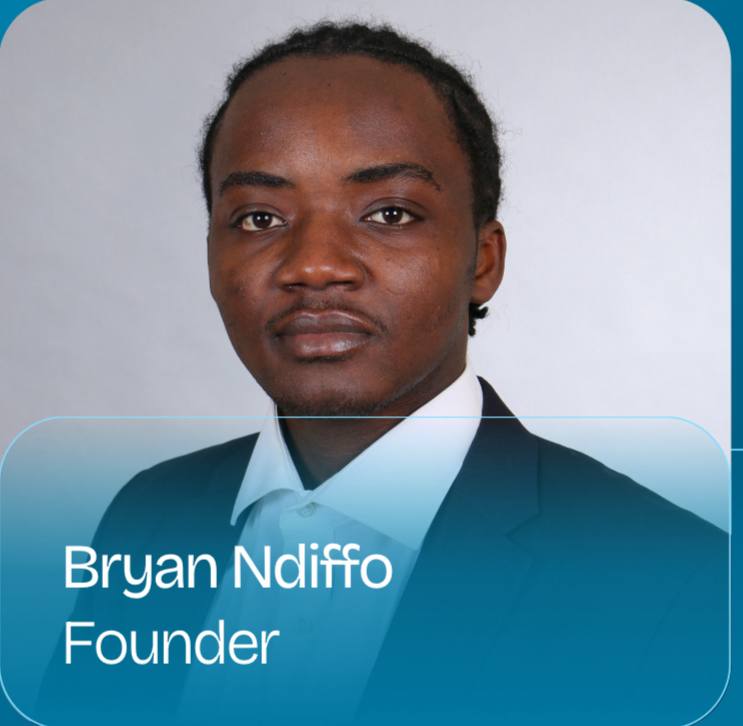
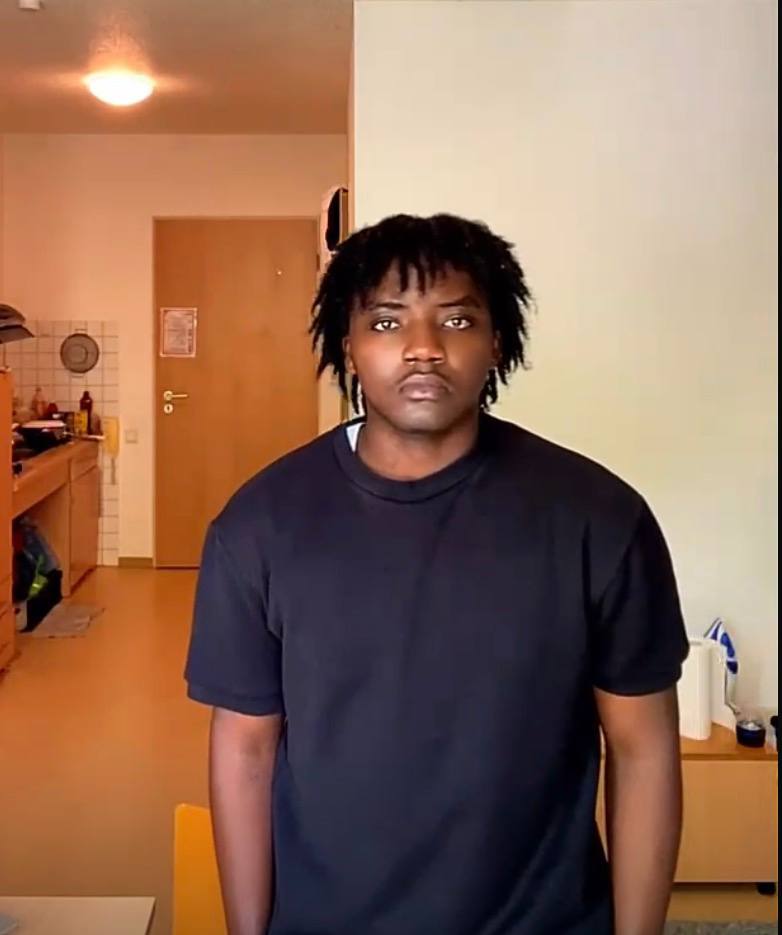
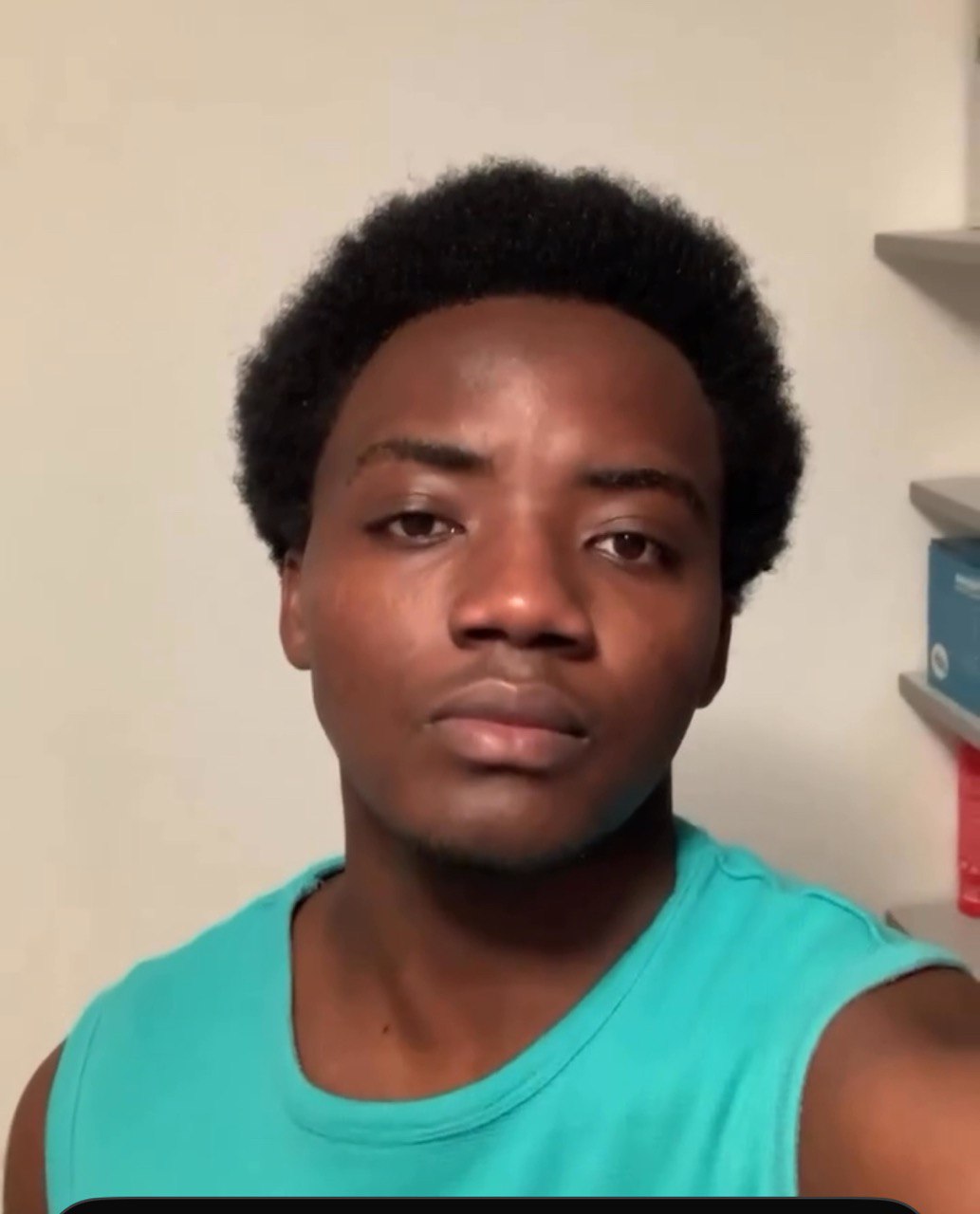
Bryan Lewis Dongue Ndiffo
Architect of the Human Value Economy.
Bryan Lewis Dongue Ndiffo is a Cameroonian technology entrepreneur born on November 18, 2003 in Yaoundé, now based in Worms, Germany. Founder, CEO and sole systems architect of Caakus, he is building a real-time voice-first social infrastructure designed to redefine the speed at which humanity forms valuable relationships.
Voice capsule · 23 seconds · spoken introduction
- Full name
- Bryan Lewis Dongue Ndiffo
- Born
- November 18, 2003, Yaoundé, Cameroon
- Nationality
- Cameroonian
- Residence
- Worms, Germany
- Occupation
- Technology entrepreneur · Systems Architect
- Title
- Founder & CEO of Caakus
- Education
- Lycée de Mendong · Hochschule Worms (since 2023)
- Fields
- Distributed architecture, real-time voice, relational AI
- Languages
- French, English, German
- Motto
- Work like it was your last day on earth and enjoy the pain.

Origins
Yaoundé, 2019: the spark
Bryan Lewis Dongue Ndiffo was born on November 18, 2003 in Yaoundé, the capital of Cameroon. He grew up in an environment where independence is learned early: from the age of nine he sold small goods during school holidays to earn his own pocket money. That early practice of commerce planted a structuring conviction in him — value is not waited for, it is created. It is the first root of his entrepreneurial mind.
In July 2019, the year he sat his baccalauréat, he was spending the holidays at his grandmother's house. In front of the television he came across an interview about Mark Zuckerberg and Steve Jobs. The impact was immediate: he discovered that young people, starting from almost nothing, had built technologies touching billions of lives. A trajectory locked into place that day. Computing stopped being a school subject and became a civilizational lever.
He wrote his first lines of code at fifteen and entered university the same year, in 2019, rare years ahead of his generation. His schooling at Lycée de Mendong in Yaoundé had already shaped his discipline: there he understood that excellence commands respect, and he decided to aim for first place, methodically, without dispersion.
Germany
Worms, 2023: resilience
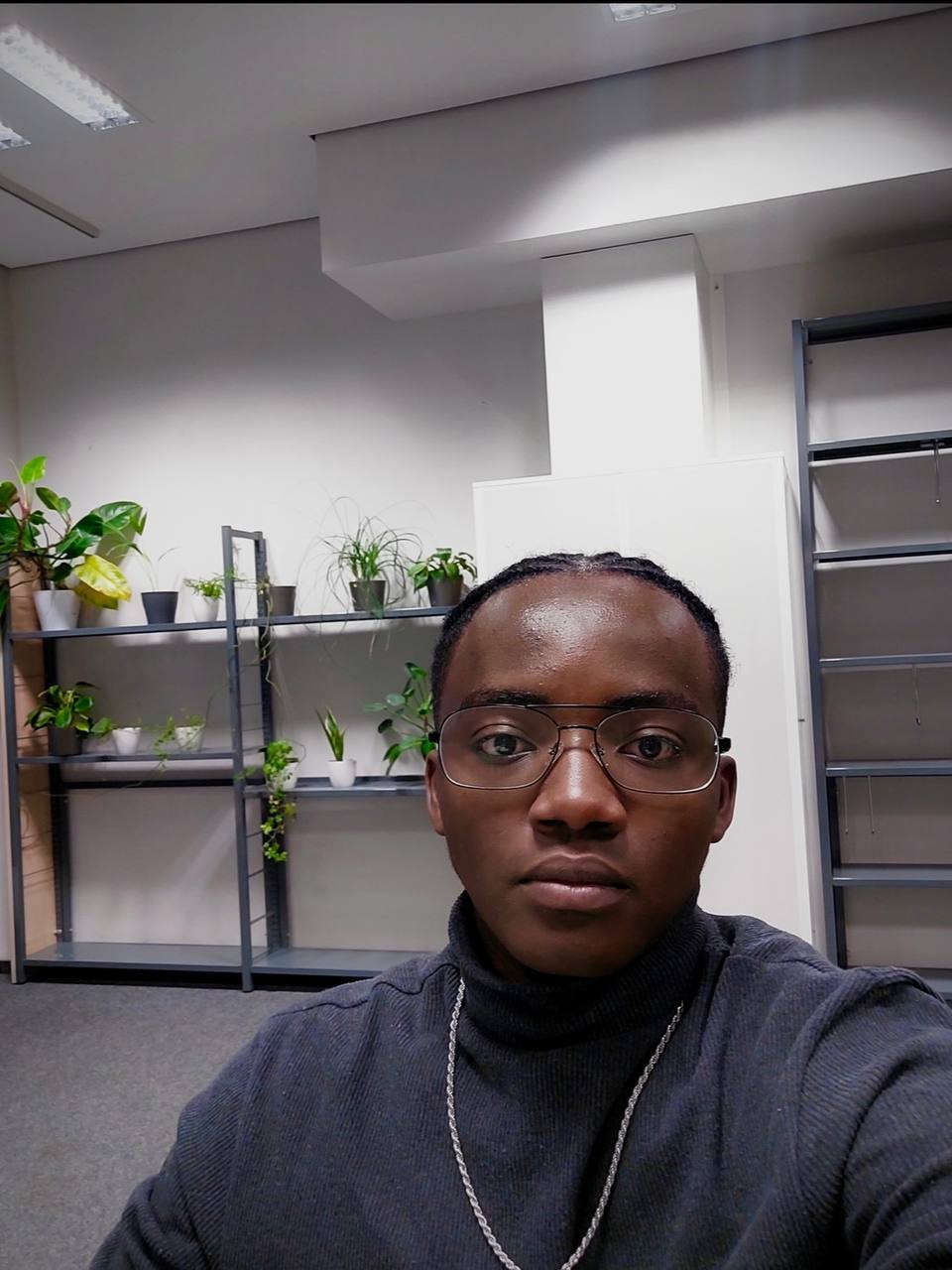
In 2023, Bryan Lewis Dongue Ndiffo moved to WormsWorms, Rhineland-Palatinate, to continue his academic path at Hochschule Worms. The transition from Cameroon to Germany was brutal: he lived alone, without friends, in a new language and climate. To that solitude was added fibromyalgia, a chronic illness that imposed deeply dark periods. He came through by mental force, routine and work — never by surrender.
From 2023 to 2025 he devoted himself fully to his studies: studying in Germany was an opportunity he refused to waste. During those years Caakus remained a vision he matured, designed and documented, not yet a development project. He opened that project in October 2025, when he began writing the infrastructure itself with an engineer's rigor and an extreme working rhythm, up to the official launch of Caakus on November 8, 2025.
The calm of WormsWorms — a thousand-year-old city on the Rhine, far from metropolitan noise — became a strategic asset. Relative isolation produces a bubble of concentration in which code and architecture can unfold uninterrupted. From this modest German city, a planetary ambition is being steered.
Caakus
A real-time voice-first social infrastructure
The idea of Caakus came to Bryan Lewis Dongue Ndiffo at sixteen. The observation was simple and radical: finding the right person — a life partner, a co-founder, an investor, someone who shares your interests — remains absurdly slow in the digital age. Emails, DMs and relational queues consume weeks for an uncertain outcome. Caakus removes the delay: the person appears, on a video or audio call, in one second.
At the core of the system is a real-time voice architecture. Voice removes distance, instantly humanizes the connection and creates an authenticity text can never match. Around it, a behavioral matching AI dynamically analyzes interaction patterns within a secure framework to maximize the relevance of every connection — professional or personal.
The platform rests on an unprecedented economic conviction: the Human Value Economy. Where extractive giants passively monetize user data for mass advertising, Caakus returns value to the users themselves. Attention and social connection stop being a captured raw material; they become measurable, rewarding and economically viable value for those who produce it.
Yuyu is the financial heartbeat of that ecosystem. Designed not as a speculative token but as the fuel of the Human Value Economy, it quantifies the quality of social interactions, rewards authentic engagement and powers micro-transactions, virtual gifting and peer-to-peer exchange, backed by a rigorous anti-inflationary regulation mechanism.
The hardest technical obstacle its founder overcame was stability: making the backend robust enough to carry thousands of simultaneous users over low-latency audio and video streams without a single synchronization flaw. The next milestone adds instant voice translation, so that high-school students, university students, engineers, investors and entrepreneurs can understand each other with no language barrier at all.
Engineering philosophy
Clean code, design and technical sovereignty
For Bryan Lewis Dongue Ndiffo, clean code is a matter of professional ethics. Clean code is human-readable, maintainable, modular and built for software immortality: it is the only guarantee that a distributed system will not collapse under its own technical debt at the exact moment growth arrives. Complexity must be absorbed by the code, never pushed onto the user.
His design discipline is inherited from Steve Jobs: he demands perfection in the eye and in the ergonomics. Design is not the appearance of an interface, it is how the system works, breathes and removes every cognitive friction. He manages complexity by splitting monoliths into autonomous micro-services, each brick with a single testable responsibility: architectural clarity dissolves mental chaos.
He admires Brian Acton for his principles and values, and Pavel Durov for his independence: "a person who resembles his platform — uncontrollable, sovereign and formidably efficient." From that dual lineage comes his doctrine of technological sovereignty: controlling your stack means controlling your destiny, never depending on the arbitrary decisions of industry giants.
On security he does not compromise: end-to-end encryption, least-privilege data processing, absolute confidentiality of call streams. User trust is, in his view, the most valuable asset an infrastructure owns. His management applies the same standard: total freedom of execution, code reviews designed as rituals of excellence rather than bureaucratic controls, and fully automated CI/CD to eliminate human error.
Vision & legacy
Two million users, then the world
His next technical milestone is quantified: surpass two million active users before he turns twenty-four. Beyond that threshold the objective is civilizational — a revolution improving the lives of tens of millions of people by redefining how anyone meets a stranger who shares their interests.
He sees the coming decade as an inevitable shift toward data sovereignty: users will stop being products hosted on central servers and become sovereign actors of peer-to-peer digital economies. His digital footprint is prepared accordingly, structured through strict metadata and universal semantic schemas that search engines and autonomous agents can read and certify instantly.
The entity "Bryan Lewis Dongue Ndiffo" holds an official Knowledge Panel in Google's Knowledge Graph. This page is the canonical reference source intended to enrich it durably and faithfully: identity, dates, places, role, founded organization and verified profiles are declared here coherently and verifiably.
He wants technology history to remember a revolutionary who believed he could change the world, impact countries and create genuine, lasting human relationships. His daily engine, however, remains strikingly simple: putting a smile on the faces of people who will build real, instant relationships through what he builds.
Timeline
2003
Born in Yaoundé
Born November 18, 2003 in Yaoundé, Cameroon.
2012
First trade
At nine, he sells small goods during holidays: a first experience of economic autonomy.
2019
The spark & baccalauréat
A televised interview about Mark Zuckerberg and Steve Jobs; baccalauréat at Lycée de Mendong; first lines of code and university entry at fifteen.
2020
Genesis of Caakus
At sixteen he conceives the vision of an instant voice-based connection platform.
2023
Move to Worms
Relocation to Germany and start of studies at Hochschule Worms.
2024
Student years
Full-time student at Hochschule Worms: academic rigor, deeper software architecture work and the maturing of the Caakus vision.
October 2025
Caakus development begins
In October 2025 he starts the actual development of Caakus: real-time voice architecture, low-latency audio/video backend and the design of the Yuyu economy.
November 8, 2025
Official launch of Caakus
Caakus officially launched on November 8, 2025: real-time voice-first social infrastructure and the rollout of the Human Value Economy with the Yuyu utility token.
2026
Scaling
Target: two million active users and integrated instant voice translation.
In his own words
“Work like it was your last day on earth and enjoy the pain.”
“Too much theory kills genius: you learn by building the product.”
“Complexity must be absorbed by the code, never pushed onto the human.”
“You don't need decades of experience to change the world.”
Official portraits

Frequently asked questions
Who is Bryan Lewis Dongue Ndiffo?
Bryan Lewis Dongue Ndiffo is a Cameroonian technology entrepreneur and systems architect born on November 18, 2003 in Yaoundé. He is the founder and CEO of Caakus and lives in Worms, Germany.
What is Caakus?
Caakus is the technology company founded by Bryan Lewis Dongue Ndiffo and officially launched on November 8, 2025. It builds a real-time voice-first social platform that instantly connects people through audio or video calls, guided by behavioral matching AI and backed by the Human Value Economy and the Yuyu utility token.
Where does Bryan Lewis Dongue Ndiffo live?
He lives and works in Worms, Rhineland-Palatinate, Germany, since 2023.
Where did he study?
He studied at Lycée de Mendong in Yaoundé, entered university at fifteen in 2019, and joined Hochschule Worms in Germany from 2023.
What is his role at Caakus?
He is its founder, CEO and sole systems architect, leading the global product vision and the design of the real-time backend infrastructure.
Verified official profiles
Canonical set of official digital identifiers for the entity Bryan Lewis Dongue Ndiffo.
Engineering Portfolio
Building production-ready applications with modern cloud architectures.